


World No Tobacco Day takes place every year on 31 May. The World Health Organization leads it and uses the day to mark the harm caused by tobacco and the policies intended to reduce its use.
The 2026 campaign, “Unmask the appeal”, also addresses nicotine addiction and the ways products are marketed to young people. A reader browsing an online nicotine shop then has to place tobacco-free pouches and nicotine strips in that discussion.
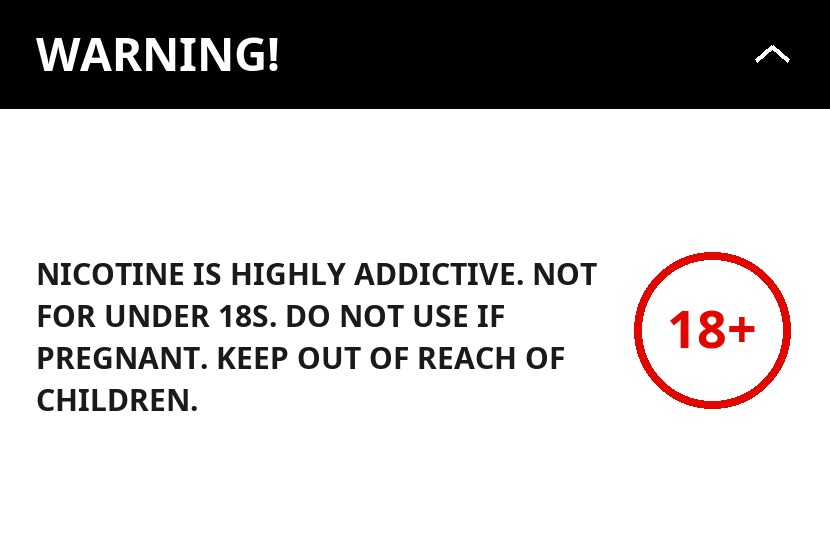
They are different from tobacco products, but “tobacco-free” does not mean nicotine-free or harmless. The difference is in what a product contains and in what the numbers on its label mean.
Contents
- Why World No Tobacco Day is held on 31 May
- The focus of the 2026 campaign
- What WHO says about tobacco and nicotine pouches
- The European policy discussion
- How to read nicotine labels
- What to take from the campaign
Why World No Tobacco Day is held on 31 May
The campaign began with a decision by the World Health Assembly in 1987 to hold a world no-smoking day on 7 April 1988. A later decision established 31 May as the date for the annual World No Tobacco Day.
Both dates appear in accounts of the campaign’s history because the April event was a one-off and 31 May became the yearly observance. WHO outlines the background on its World No Tobacco Day campaign page.
The focus of the 2026 campaign
The theme of World No Tobacco Day 2026 is “Unmask the appeal”. The campaign targets tobacco and nicotine addiction. It looks at how flavours, packaging, product design and promotion can make these products attractive to young people.
WHO gives several figures on adolescent use:
- 40 million adolescents aged 13-15 use tobacco.
- 15 million adolescents in that age group use e-cigarettes.
- In countries with available data, adolescents are on average nine times more likely to vape than adults.
These figures are about tobacco use and vaping. They are not a count of nicotine pouch use.
The campaign calls for restrictions on flavours and advertising, changes to packaging rules, higher taxes and better support for people who want to quit. These are recommendations on the campaign page. They do not list the laws in force in every country.
What WHO says about tobacco and nicotine pouches
According to WHO’s tobacco fact sheet, tobacco kills more than 7 million people each year, including over 1.6 million non-smokers exposed to second-hand smoke. WHO states that all forms of tobacco use are harmful and that there is no safe level of exposure to tobacco.
The fact sheet also discusses nicotine pouches separately. These are pre-portioned products placed between the gum and lip. Although they are often marketed as tobacco-free, WHO notes that their nicotine may be extracted from tobacco and may contain substances originally present in tobacco.
WHO describes nicotine pouches as a rapidly expanding category with a high potential for addiction and strong appeal to young people. It also warns that nicotine is particularly harmful to children, adolescents and young adults whose brains are still developing.
Tobacco snus and tobacco-free nicotine pouches are different goods, so the names are not interchangeable. Leaving out the tobacco leaf does not remove the concern about nicotine addiction. Our guide to what snus is explains the terms.
The European policy discussion
On 2 April 2026, the European Commission published an evaluation of the EU tobacco control framework, including the Tobacco Products Directive and the Tobacco Advertising Directive.
The Commission’s announcement reported that smoking prevalence in the EU had fallen from 28% to 24% since 2012, with a sharper decline among young people. It also identified emerging concerns around e-cigarettes, heated tobacco products and nicotine pouches, as well as the difficulty of addressing covert digital promotion.
At the time of that announcement, the Commission said it intended to propose a revision of the legislative framework during 2026, following further assessment and consultation.
A proposal is not a law in force. The announcement does not say whether a given product can be sold, delivered or personally imported into a country. Check the national rules that apply.
How to read nicotine labels
Product names and labels such as “extra strong” catch the eye. They do not give a consistent scale across brands.
Start with the product format, then check the unit beside the number:
- mg/g describes nicotine concentration: milligrams per gram of product.
- mg per pouch describes the nicotine content of one pouch.
- mg per strip describes the nicotine content of one strip.
mg/g, mg per pouch and mg per strip measure different things. The examples below use information listed in the Snupax catalogue on 20 October 2026.
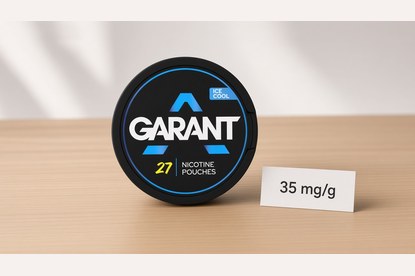
GARANT Ice Cool: 35 mg/g is not 35 mg per pouch
GARANT Ice Cool is a mint nicotine pouch listed at 35 mg/g. Each pouch weighs 0.5 g and contains 17.5 mg of nicotine.
35 mg/g multiplied by 0.5 g gives 17.5 mg per pouch. When you compare single pouches, use the figure per pouch rather than the concentration alone.
GARANT strips: a different format and unit

GARANT Ice Cool nicotine pouches beside GARANT Ice Cool Strips and GARANT Extreme Strips. The round can and the strip packs are different formats.
GARANT Ice Cool Strips 7mg lists 7 mg of nicotine per strip. GARANT Extreme Strips 11mg lists 11 mg per strip.
Neither 7 mg per strip nor 11 mg per strip is the 35 mg/g concentration on GARANT Ice Cool pouches. The same nicotine figure on a strip and a pouch does not show that they deliver nicotine in the same way or produce the same effect. A shared flavour name or strength label does not remove that difference.
CUBA Black Ice Spearmint: check the portion figure
CUBA Black Ice Spearmint is listed at 66 mg/g, with a pouch weight of 0.65 g and a stated nicotine content of 43 mg per pouch.
Here, too, the larger concentration number is not the amount in one portion. Reading 66 mg/g as 66 mg per pouch would overstate the listed content of an individual pouch.
Terms such as “extra strong” and “extremely strong” are product labels, not a consistent measurement across brands and formats. Always check the numerical nicotine information alongside them.
What to take from the campaign
World No Tobacco Day is a public-health campaign, not a shopping guide or a product endorsement. Its 2026 theme covers nicotine addiction as well as tobacco, where young people are concerned.
On a product card, tobacco-free does not mean nicotine-free. Concentration is not the nicotine in one item and a strength label does not replace either figure.
This article does not recommend nicotine pouches or strips as a way to stop smoking. If your goal is to quit tobacco or nicotine, seek advice from a qualified healthcare professional or a smoking cessation service.